Plant Virus Shows Promise as Cancer Immunotherapy

The cowpea mosaic virus (CPMV), a harmless plant virus that infects black-eyed peas, is emerging as a novel cancer immunotherapy. Rather than killing tumor cells directly, CPMV activates the immune system, turning the tumor microenvironment from immunosuppressive into highly inflammatory and responsive to attack. When injected into tumors, CPMV acts as a strong “danger signal,” […]

Plant Virus Shows Promise as Cancer Immunotherapy Read More »
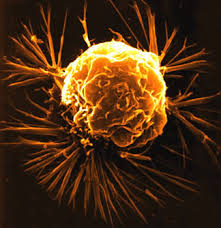
Ultra-Fast Cancer Treatments: The Future of Radiotherapy

Revolutionary radiation technologies are reshaping cancer treatment by improving precision, shortening therapy time, and reducing side effects. These innovations aim to overcome the limits of conventional radiotherapy while maintaining or enhancing effectiveness across a wide range of cancers. One major advance is FLASH radiotherapy, which delivers ultra-high radiation doses in less than a second, showing

Ultra-Fast Cancer Treatments: The Future of Radiotherapy Read More »

Total-Body PET/CT: Revolutionizing Cancer Imaging

TTotal-body PET/CT is transforming medical imaging by capturing the entire body in a single scan, unlike conventional systems that image small sections at a time. This breakthrough enables faster, more comprehensive evaluation of cancer and other diseases. A key advantage is its ultra-high sensitivity—up to 40 times greater than standard scanners—allowing detection of very small

Total-Body PET/CT: Revolutionizing Cancer Imaging Read More »

Tumor-Infiltrating Lymphocyte (TIL) Therapy for NSCLC

Tumor-infiltrating lymphocyte (TIL) therapy is a personalized immunotherapy that uses a patient’s own immune cells to fight cancer. T cells are collected from a tumor, expanded in the lab using growth factors like Interleukin-2, and reinfused after lymphodepleting chemotherapy, followed by additional IL-2 support to boost activity. This approach is promising for non-small cell lung

Tumor-Infiltrating Lymphocyte (TIL) Therapy for NSCLC Read More »

Vaccine Targeting KRAS in Pancreatic and Colorectal Cancer

ELI-002 2P is an innovative “off-the-shelf” therapeutic vaccine targeting KRAS mutations, which drive approximately 90% of pancreatic cancers and 50% of colorectal cancers . Unlike personalized mRNA vaccines, this standardized approach delivers synthesized peptides directly to lymph nodes to train T-cells to recognize and attack KRAS-mutated cancer cells. Key Clinical Results: The Phase 1 AMPLIFY-201 trial

Vaccine Targeting KRAS in Pancreatic and Colorectal Cancer Read More »

Zongertinib: A Novel EGFR Inhibitor in Advanced Non-Small Cell Lung Cancer Treatment

Zongertinib is a newly approved oral targeted therapy for patients with unresectable or metastatic HER2-mutated non-squamous non-small cell lung cancer (NSCLC) who have received prior treatment. Approved by the FDA in August 2025, it is the first oral option specifically for this patient group, marking a significant advance in targeted lung cancer therapy. Zongertinib works

Zongertinib: A Novel EGFR Inhibitor in Advanced Non-Small Cell Lung Cancer Treatment Read More »

Zusduri: Revolutionizing Bladder Cancer Treatment Through Targeted Local Delivery

Zusduri is the first FDA-approved targeted, non-surgical treatment for recurrent low-grade, intermediate-risk non–muscle invasive bladder cancer. It delivers mitomycin C directly into the bladder using RTGel® technology, which turns from liquid to gel at body temperature. This allows the drug to stay in contact with the bladder wall for hours, maximizing local effect while minimizing

Zusduri: Revolutionizing Bladder Cancer Treatment Through Targeted Local Delivery Read More »

Artificial Intelligence in Complex Liver Cancer Surgery: Precision Oncological Resection

AI is transforming liver cancer surgery by improving precision, planning, and safety. It helps surgeons better understand the liver’s complex anatomy, allowing more accurate tumor removal while preserving healthy tissue. This leads to safer procedures and better overall outcomes for patients. Before surgery, AI converts CT and MRI scans into detailed 3D models, enabling “virtual

Artificial Intelligence in Complex Liver Cancer Surgery: Precision Oncological Resection Read More »